Hi, thanks for being here!
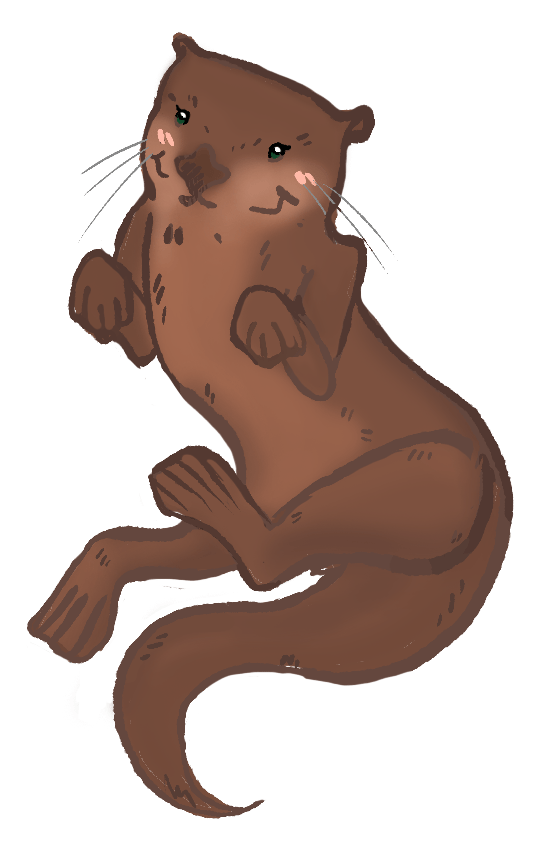
This is Otter.
Otter and I will be going through various relevant neuroscientific topics in this blog, In Otter Words:
I will write about brain-stuff I find interesting and Otter will be there too.
Why Otter?
Well, without Otter words it may be hard to understand a lot of stuff if you don’t have a neuroscience-y background.
Don’t get me wrong! Otter is super-intelligent. Just not the academically-trained-to-understand-all-the-fancy-niche-words type of intelligent. So that’s why we’re here. There are a lot of interesting and relevant things in neuroscience; stuff about our brain and behaviour that you would perhaps like to know more about but just don’t feel like reading because it’s in a big fat ol’ book or a dense paper in an academic journal.
Second reason for Otter: Otter has very interesting traits that will give us more insight about both the perception and cognition of animals and ourselves. Seeing how we differ from other species in a behavioural and neurological way allows us to draw connections between functioning and biology.
Third reason for Otter: Gosh-darn cute.
So to start this off I’d like to explain a bit more about Otter – she has very interesting features, of which cuteness, ferociousness and high-intelligence are just a few. In the next post I’ll try to discuss most of these! First, we’re going to take a look at an otters’ appearance.
What Otter?
The furry little animals are often featured in gifs, floating around, snuggling each other and their babies.
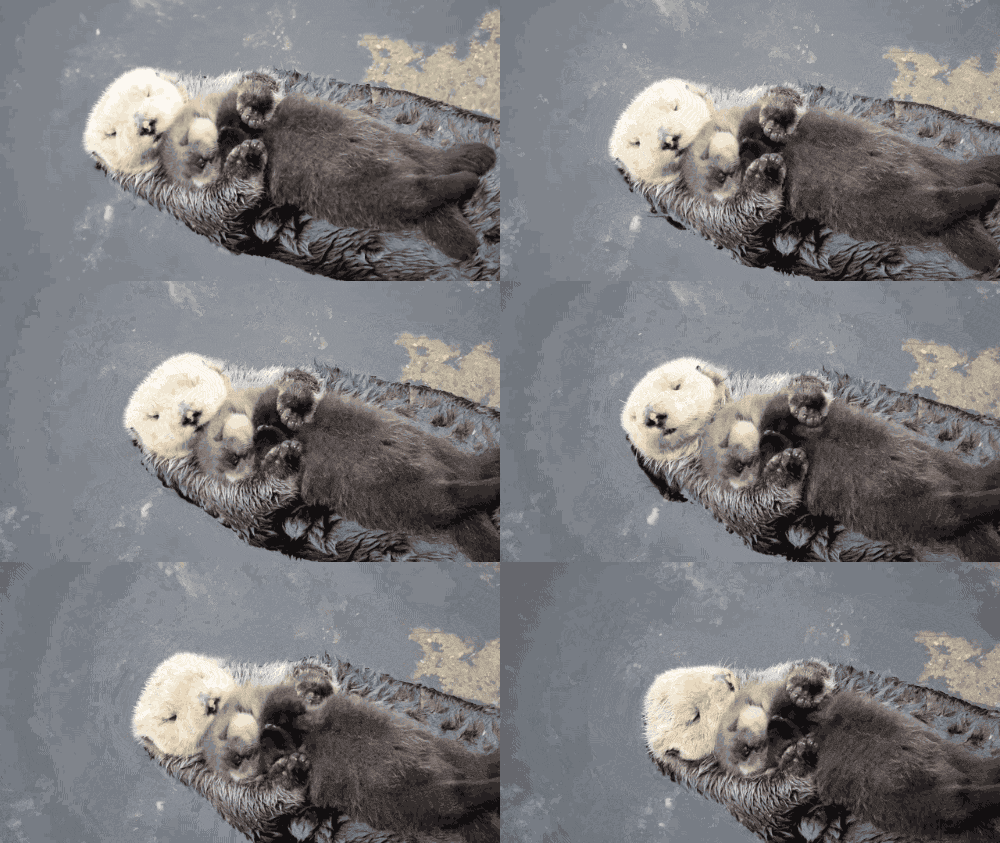
There are actually a lot of different species of otters: bigger river-otters and tinier sea-otters, from different corners of the earth. The sea otter spends most, if not all of his life in the water. River otters go anywhere, both land and water.
The sea otter is an aquatic mammal (the river otter is semi-aquatic), and is part of the weasel family. The sea otter has very large feet with webbed toes, making it easier to navigate through the water with strong leg movements. Usually, aquatic mammals have a lot of fatty blubber to keep them warm, which this slim and tiny otter obviously does not have. Still, they need to isolate themselves in the cold water they float in. Luckily, the otter has the densest fur coat of all animals with two layers 155.000 hairs per squared centimeter (!!!!).
Their beautiful thick fur allows them to remain warm and protected in cold waters. The outer layer of fur protects the inner layer, and serves as an isolator to prevent the inner one from getting wet. Unfortunately, their fur was also one of the reasons they were almost hunted down to extinction in the 17th century. Nowadays, fur-trade has been reduced significantly and, while still endangered, otters have made their comeback…!
It is important to protect the otter from other man-made threats, and prevent extinction, as otters are a keystone species. A keystone species means that they are essential in sustaining the health and stability of their ecosystem. They are stealthy hunters, cleverly keeping themselves and their environment in a healthy balance. I always start to wonder how this is driven and what it would be like to live on the basis of hunt and be hunted. How does the otter perceive her environment, and think about the choices she makes?
In Otter Words: Otters look cute and are fluffy. This has caused them quite a bit to worry about. Luckily, otters are quite clever too. The world in your eyes may be a very different place from when looking at it through someone else’s. Sometimes, it might be a refreshing to think what it would be like through the eyes of an otter.
 In Otter Words