A look at neuronal communication
When we learn new things, our brain creates new pathways. Whether we engage in physical learning, like practicing the guitar or more studious learning like acquiring a new language or even getting to know a new person. We learn and remember because the connections between neurons in our cell, grow and strengthen. This ability of our brain is called plasticity.
The greek word plastikos, means to have the quality to be malleable. So our brains, being malleable, are plastic-fantastic!

Especially in our “critical period”, the younger years of our life, our brain is extra plastic. There is a lot to learn, and a lot of possibility for our neurons to grow; our brain makes happy use of that. This is why we are able to learn so much in our younger years, and for instance also why it is easier to learn languages at a younger age.
So our brains are malleable, Not in the sense that we all have very different shapes of brains, but in terms of the connections within. This happens in chemical and electrical ways on the inside of our brains.
Our brain creates new pathways by creating new connections between neurons in the form of synapses: The word synapse, from the Greek sunapsos indeed means connection, or touching point. The synapse is the point where communication takes place and information is transmitted from one neuron to the other.
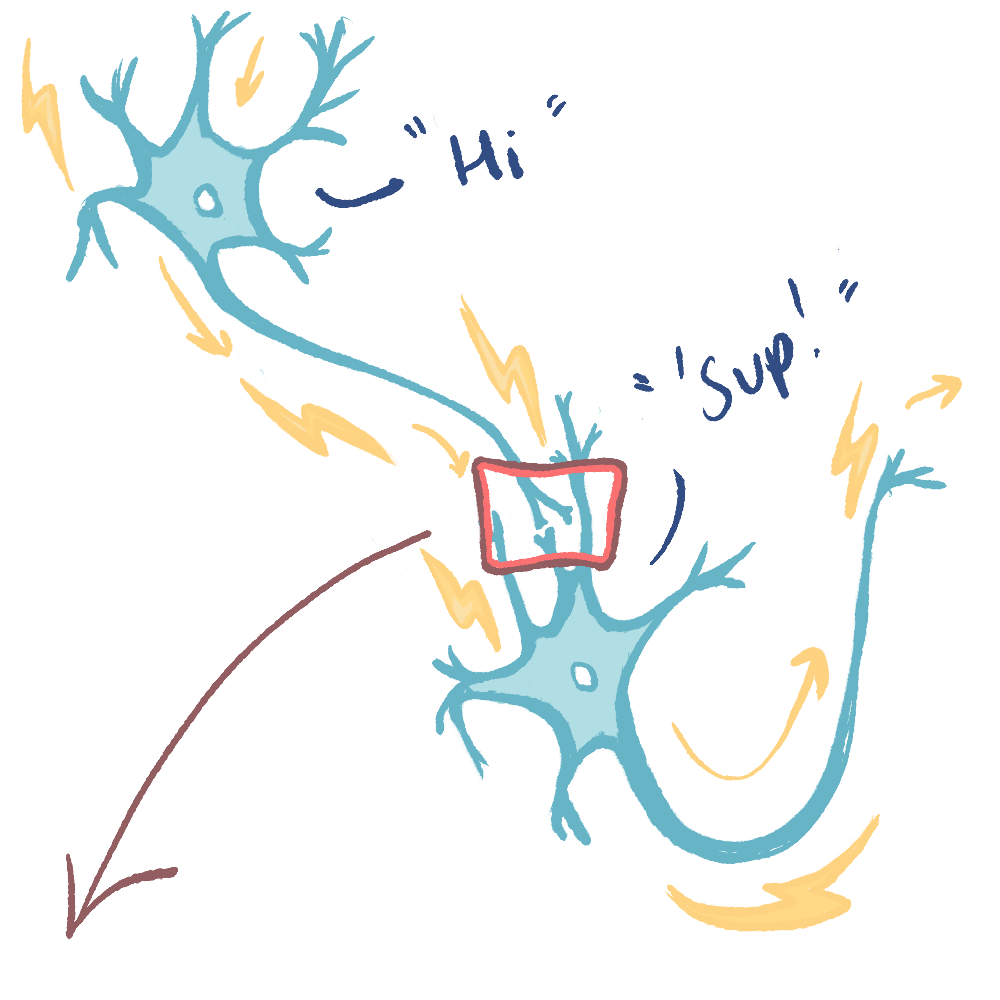
Neurons communicate with each other using electrical signals, which enter through dendrites and exit through the axon (” Say what now?” – Check out this post).
The electrical signals going through a neuron trigger a flow of chemicals, neurotransmitters, that travel between neurons: Through synapses.
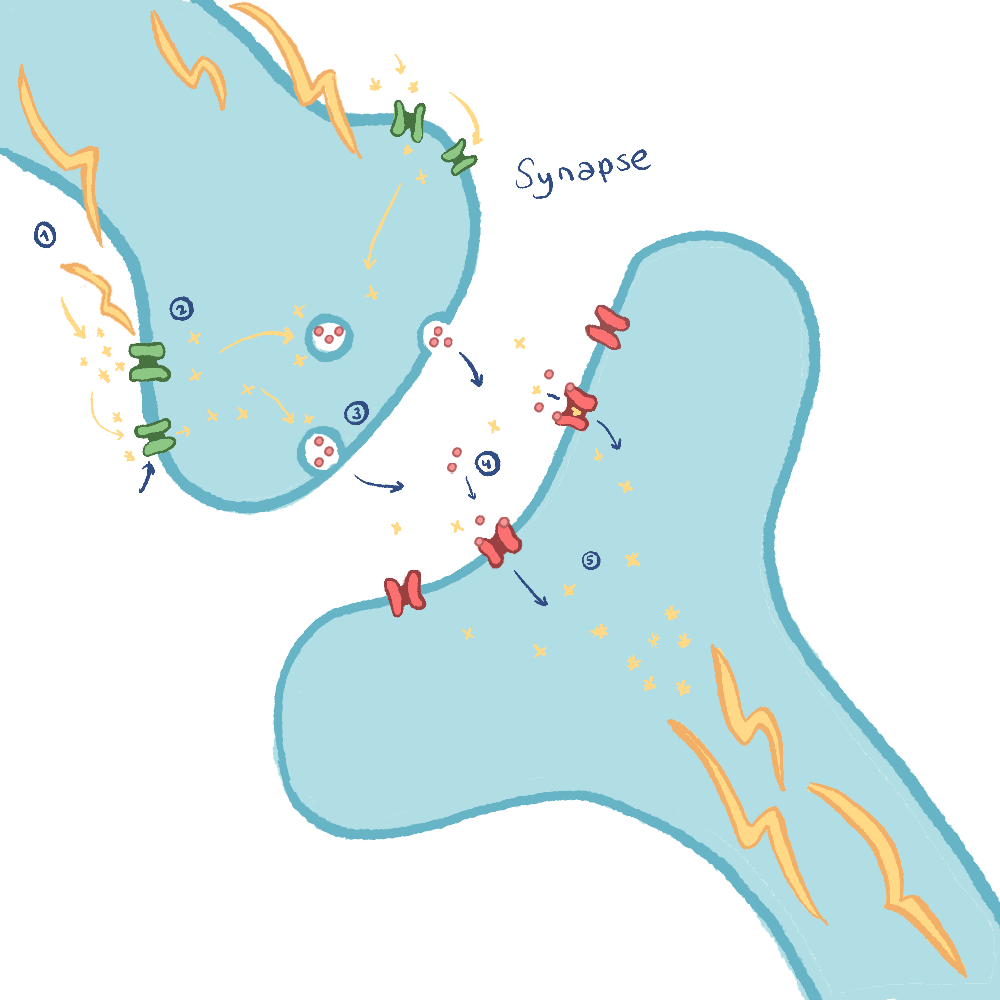
4. Arriving on the other side of the synapse, the neurotransmitters bind to the gate they fit into: Their receptor: As soon as the neurotransmitters bind, the receptors open to continue the flow of the electrical pulse.
- When an electrical pulse comes through a neuron, it travels from the dendrites to the axon, where the synaptic terminal is.
- The electrical movement causes gates in the cell membrane to open. These gates allow the influx of ions into the neuron.
- The electrical charge of the ions triggers the movement of tiny capsules. These tiny capsules enfold the essential part of synaptic communication: neurotransmitters.
The capsule filled with neurotransmitters travels to the synaptic membrane, and fuses through the cell wall, so that the neurotransmitters are free to go to the emptiness between two neurons: the synaptic cleft.
When a lot of electric pulses come through a certain connection of neurons, more synapses are shaped to facilitate this movement. Just like we have the need for more lanes on a highway from one important place to another to smoothen the rush hour and prevent traffic jams, neurons build more synaptic terminals to allow smoother communication between brain areas.
So when a certain connection of neurons is activated through electrical signals frequently, it strengthens this collaboration. Like a great neuroscientist, Donald Hebb, once said: “When they fire together, they wire together“. In which “fire”, refers to the electrical impulse neurons send, and the wiring, the connection that is build.
This also means, that when connections are not used as much, synapses get weaker or even disappear: “Use it or lose it“. This process is called synaptic pruning and is also essential, as it allows us to manage our most-used connections efficiently
A whole web of highways is formed of wired neurons, forming the white matter of the brain. They each have the function of connecting different parts of our brain together. And while we learn new connections form and strengthen, and our brain comes completely attuned to the things we experience in our everyday life. And when we stop practicing, the connections slowly reduce, and may disappear. As such, our brain efficiently manages the connections we need, and the ones we don’t need.
In Otter Words: When we practice, in doing or in thinking, our brain practices and strengthens with us. Learning can be seen in the brain; like a tree branches out, new dendrites grow and synapses increase.
 In Otter Words